

Every Successful Business Creates Something Of Value
What Is Value Creation?

Happy New Year to my Substack friends.
How has 2026 started for you?
I don’t make New Year’s resolutions anymore—they never worked for me.
Instead, I focus on consistent effort, reflection, and planning.
That approach keeps me moving forward; maybe it will for you, too.
We don’t need New Year’s resolutions to get serious about our lives and goals.
I used to love them—a fresh start and a clean slate—but found they weren’t effective for me. I just keep going!
On that note, let me move to today’s review.
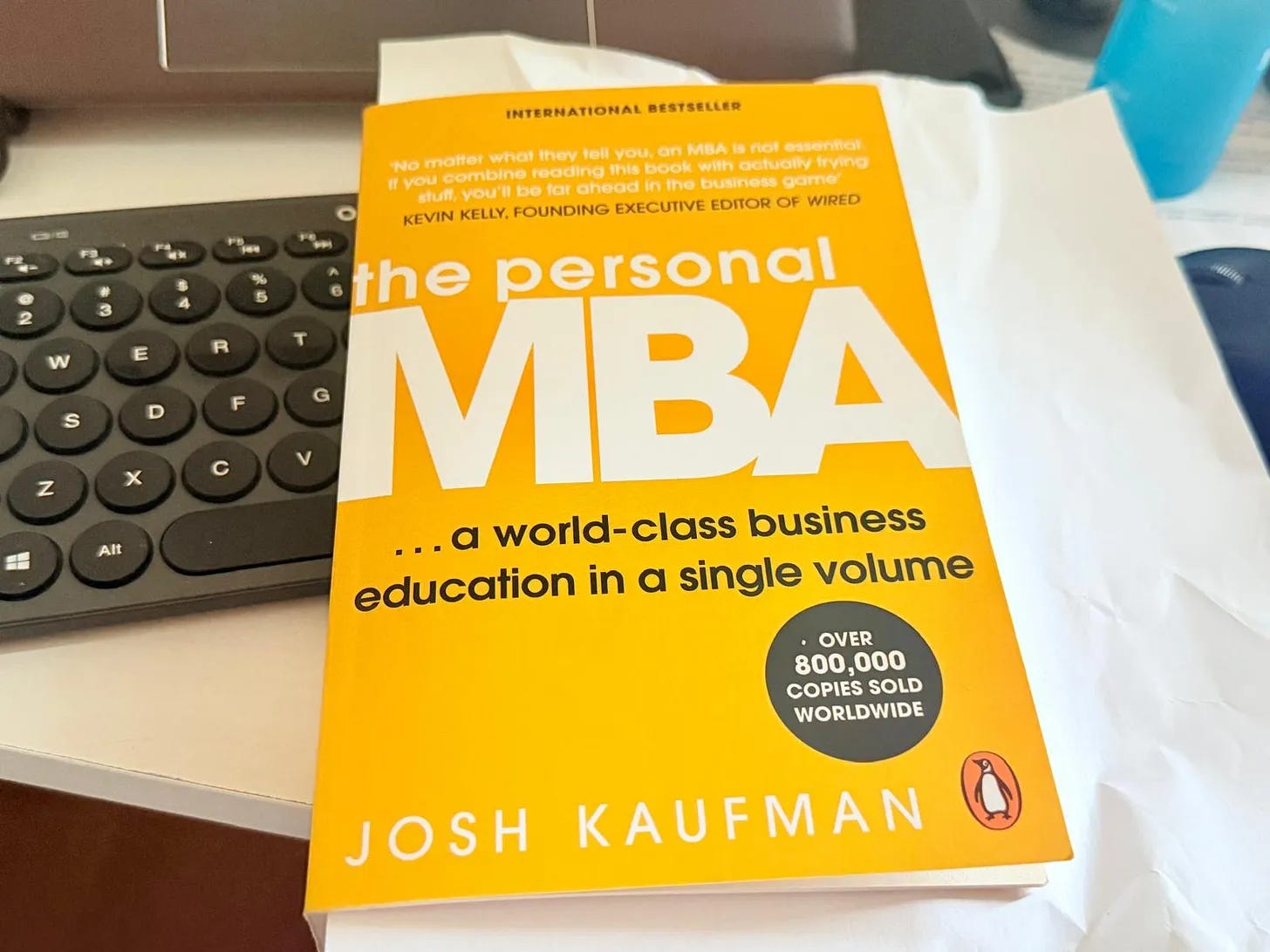
I will briefly cover the first chapter of The Personal MBA by Josh Kaufman (I used to call him Jeff—don’t know why! If you see where I called him Jeff, don’t mind me. Maybe Jeff sounds like Josh).
To provide some context, we created a small business and leadership class for our team at Care City Media last year. The idea behind it is very simple.
I realised most of us lacked a true grasp of how business works.
We had passion, skills, and talent, but lacked essential business knowledge.
I considered pursuing an MBA, but fortuitously discovered The Personal MBA through our Chief Technical Officer.
After reading the book’s review, I decided to get it for key members of our team. We planned to study it together, have regular reviews/classes, write short essays about what we’re learning—this essay is actually my review—and apply what we’re learning.
To date, we’ve covered the introduction and recently completed the first chapter, which explores value creation. (Read my review of the introduction here.)
Josh’s key idea in The Personal MBA is that you don’t need to pay for a traditional MBA to gain foundational business knowledge. And so far, as I read and study The Personal MBA, I agree with him.
The Personal MBA will equip you with the foundational understanding of business principles.
If you want to build anything at all, get business education.
It will sharpen and shape your perspectives. Believe me. You’ll have a very high edge over others who don’t know how business leadership works. And this year at Care City Media, this is one key area we’re focusing on—building the capacity of our core team members in business, leadership, innovation, and entrepreneurship.
With that background, let’s now turn to Value Creation...
What Is Value Creation?
“Make something people want... There’s nothing more valuable than an unmet need that is just becoming fixable. If you find something broken that you can fix for a lot of people, you’ve found a gold mine.”
Paul Graham, cofounder of Y Combinator.
Of course, I can’t review all the chapter’s content in detail—it’s practically impossible. Instead, I’ll share some of the most important ideas that deeply affected me.
“Every successful business creates something of value.”
Successful businesses master value creation, discovering what they do best that meets real needs.
Business is simply about meeting people’s needs. From Google, Facebook, Dangote, MTN, your local food vendor, and convenience stores. They are all meeting the needs of people at different levels and scales.
At its core, value means making people’s lives better.
“The best businesses in the world are those that create the most value for other people.”
I enjoy admiring great businesses and reflecting on their products and services.
You see, business shouldn’t be difficult.
A common mistake among businesspeople is neglecting to define the type of value they offer their target market.
If you identify your unique value and target market, business success becomes far more attainable when you apply value creation principles.
The Five Parts Of Every Business
This is why I’ve come to love The Personal MBA. It makes everything very simple and easy to understand. You learn complex concepts without even realising they are complex.
A business is a repeatable process.
Here’s how The Personal MBA breaks it down:
Creates and delivers something of value.
That other people want or need.
At a price they’re willing to pay.
In a way that satisfies the customer’s needs and expectations.
So that the business brings in enough profit to make it worthwhile for the owners to continue operating.
“Take any one of these five factors away and you don’t have a business—you have something else. A venture that doesn’t create value for others is a hobby. A venture that doesn’t attract attention is a flop. A venture that doesn’t sell the value it creates is a nonprofit. A venture that doesn’t deliver what it promises is a scam. A venture that doesn’t bring in enough money to keep operating is not going to exist very long.”
This framework captures the core processes that make up any serious business. If any part is missing, what you’ve got is something else—not a business.
What are you building? A hobby, flop, scam, nonprofit, or an operational failure. You can use the process to determine where you are on the scale.
Throughout the chapter on value creation, these five parts appear repeatedly in all discussions:
Here are the five defined interdependent processes of all businesses:
Value Creation: Finding out what people need.
Marketing: Attracting the right attention.
Sales: Turning attention into paying customers.
Value Delivery: Delivering on your promise.
Finance: Bringing in money to keep operations running.
To wrap up, I don’t want to make this review any longer—even though I wish I could. Maybe I’ll explore longer reviews later.
Here are other sections I would definitely review soon:
The Core Human Drives
The Ways To Evaluate A Market.
The Hidden Benefits Of Competition.
Twelve Standard Forms Of Value.
Product Development.
The Chapter on Value is incredibly loaded!
I can’t count how many times I’ve read through it. Any time I read it, I find something new and enlightening.
So far, reading and studying The Personal MBA has significantly changed my perspective on business. There are things I am understanding on deeper levels beyond the surface.
If you are an entrepreneur or leader, I suggest you get the book, especially if you haven’t yet gotten an MBA. This book will guide you in deciding whether to pursue an MBA (you might not even consider paying for one after studying it, unless you want it for credentialing or networking).
We will be starting the chapter on Marketing today! I am so excited!
I also remembered mentioning that we might have general reviews of the book. Fingers crossed. It might happen soon (and I also made a promise—😉).
Catch you soon.
Enjoy your weekend.